
What are Small volume Parenterals?
Small Volume Parenterals (SVPs) are sterile pharmaceutical preparations intended for administration by injection or infusion in relatively small volumes. In pharmaceutical manufacturing, the term generally refers to parenteral products contained in volumes of 100 mL or less.
SVPs represent an important category of injectable medicines and include a wide range of formulations, active pharmaceutical ingredients, and primary packaging systems. Depending on their formulation and intended use, they may be supplied as solutions, suspensions, emulsions, concentrates, or products requiring reconstitution before administration. Consequently, although SVPs are manufactured on a smaller volume scale than Large Volume Parenterals (LVPs), they are subject to the same fundamental principles of pharmaceutical quality:
- sterility,
- control of particulate matter,
- microbiological quality,
- chemical stability,
- protection of the product throughout its shelf life.
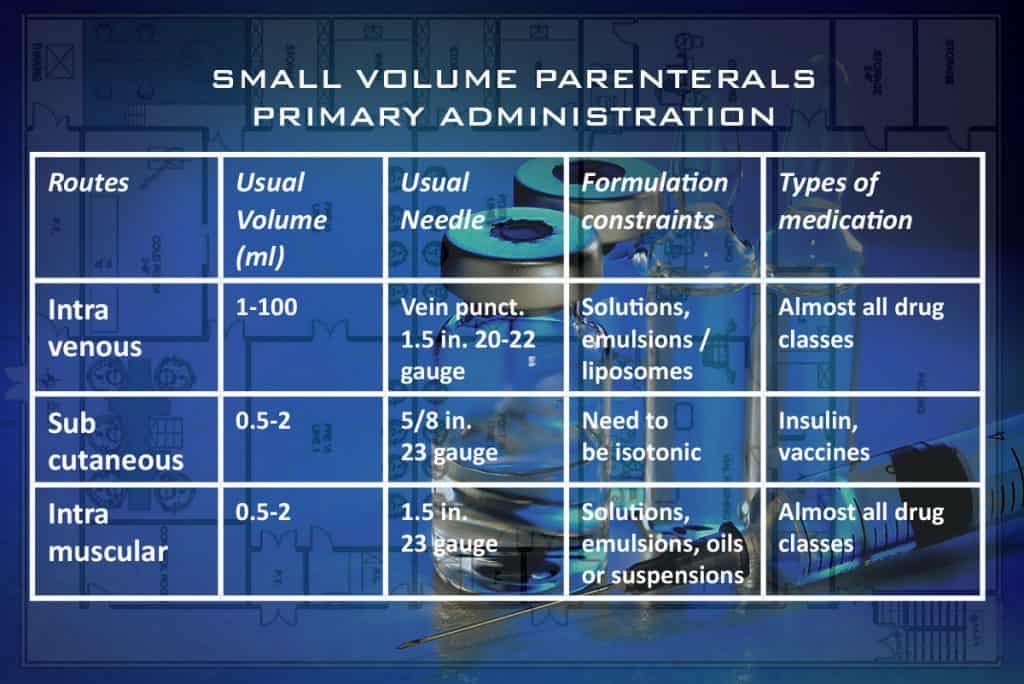
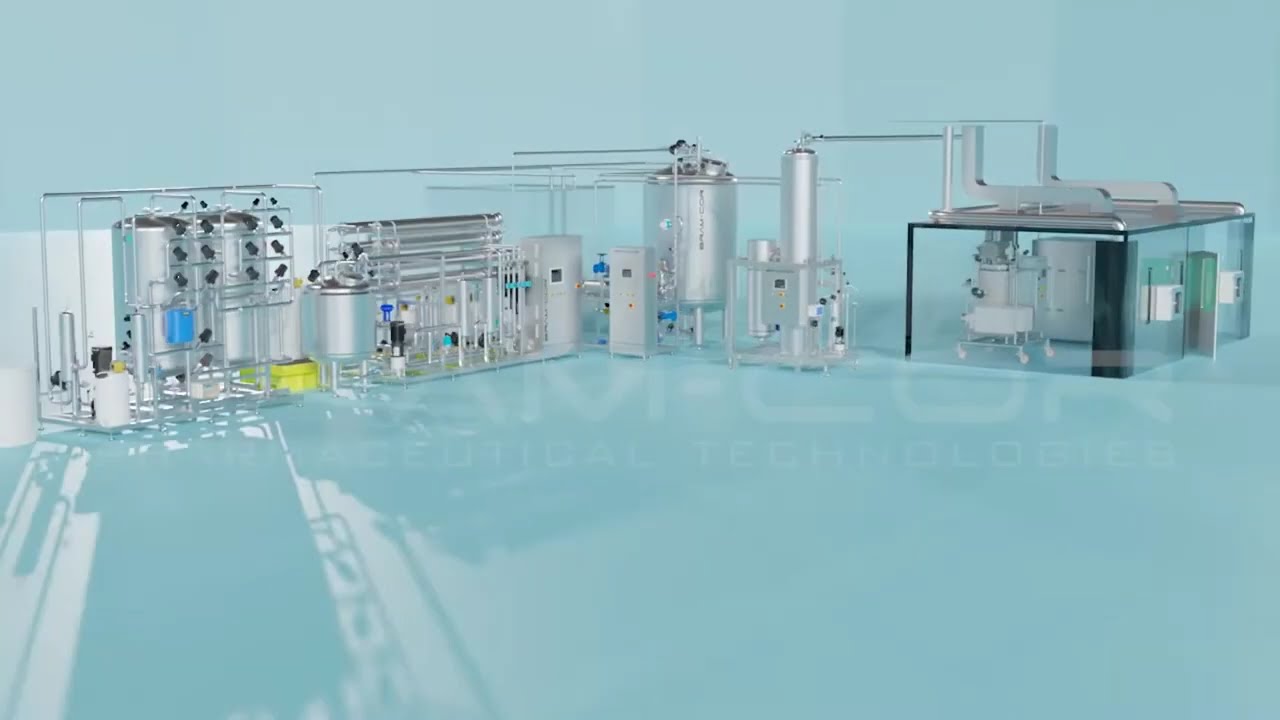
SVP manufacturing therefore requires carefully controlled processes, appropriate pharmaceutical water systems, validated sterilization or aseptic processing procedures, and suitable filling and container-closure technologies. Knowledge of SVP manufacturing also provides useful context for understanding the more extensive requirements associated with Large Volume Parenterals and intravenous fluids.
Many type of SVP products
Injectable Solutions
Solutions are among the most common SVP formulations. The active pharmaceutical ingredient and excipients are completely dissolved in a suitable vehicle, often Water for Injection (WFI). Examples include injectable solutions containing antibiotics, analgesics, anesthetics, vitamins, electrolytes, and other active pharmaceutical ingredients.
Injectable Suspensions
In suspensions, finely divided particles of the active pharmaceutical ingredient are dispersed in a suitable liquid vehicle. Because the active ingredient is not completely dissolved, manufacturing requires careful control of particle characteristics, homogeneity, sedimentation, and redispersibility.
Injectable Emulsions
Emulsions contain two normally immiscible liquid phases, such as oil and water, stabilized through the use of suitable emulsifying systems. Their production requires specific process controls to ensure physical stability, appropriate droplet-size distribution, and product uniformity.
Concentrates and Products for Reconstitution
Some injectable medicines are supplied as concentrated solutions or as sterile products that must be diluted or reconstituted before administration. These formulations require particular attention to concentration, stability, compatibility, and the quality of the diluent used during preparation.
Primary packaging for SVPs
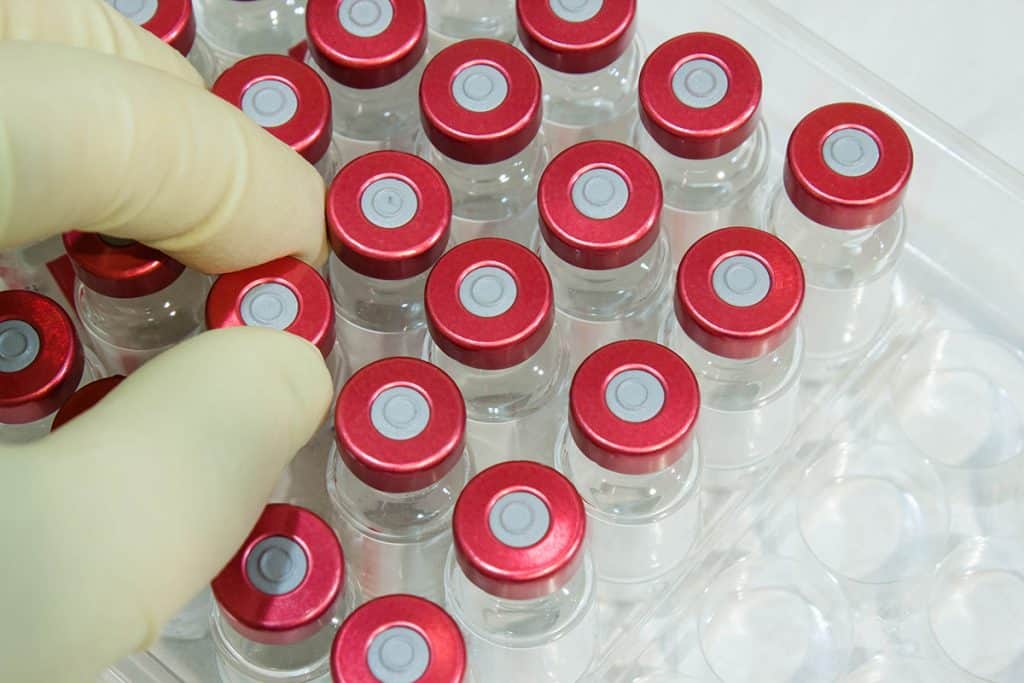
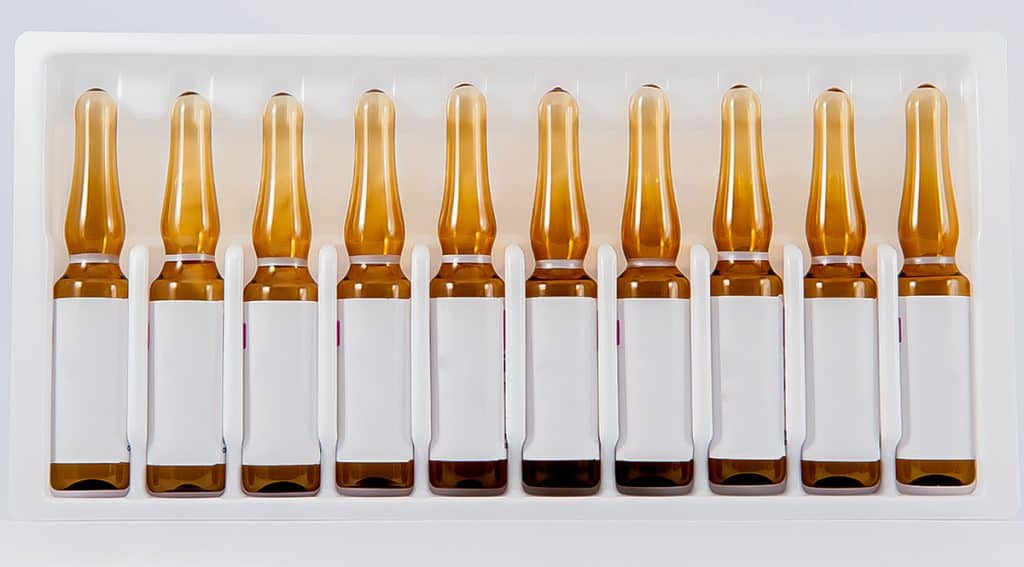
SVP products can be supplied in different types of primary containers, selected according to the formulation, route of administration, stability requirements, and intended use. Common packaging systems include:
- Glass vials
- Ampoules
- Prefilled syringes
- Cartridges
- Small-volume plastic containers
The primary container is an integral part of the pharmaceutical product. Its materials must be compatible with the formulation and must protect the contents from contamination, interaction with the environment, and loss of product quality.
Particular attention is therefore given to the container closure system and its ability to maintain product integrity throughout manufacturing, storage, transportation, and use.
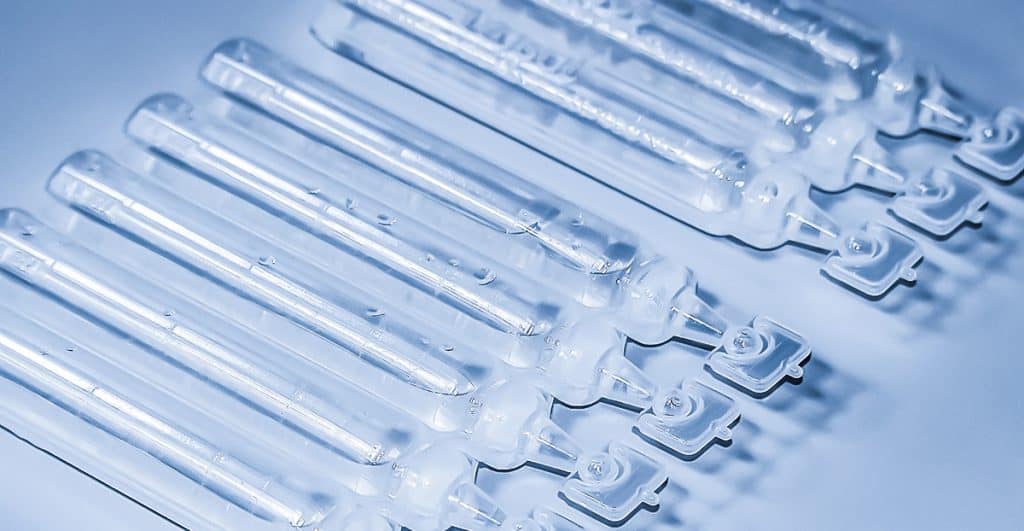
Ophthalmic products packaged in squeezable containers, although topically applied to the eyes (and not administered by injection), also fall under Small Volume Injections (SVI) classification.
Formulation and Product Quality
Small volume parenteral products can be formulated and packaged in several ways and include a wide range of products like biological products, allergenic extracts, liposome and lipid products, radiopharmaceutical products, genetically engineered or biotechnology products, … The characteristics of an injectable formulation directly influence the manufacturing process. Important parameters may include:
- pH
- Osmolality
- Solubility
- Chemical stability
- Physical stability
- Compatibility with the container
- Particulate matter
- Microbiological quality
- Endotoxin levels
The formulation must remain stable during processing and throughout its intended shelf life while maintaining the required pharmaceutical and microbiological quality. For this reason, SVP manufacturing is not simply a matter of filling a liquid into a small container. The formulation, process equipment, utilities, environmental conditions, sterilization strategy, and packaging system must operate as an integrated system.
SVP Manufacturing process
The manufacturing process depends on the formulation and the characteristics of the final product. A simplified process flow may include:
Raw Materials → Water Preparation → Compounding → Filtration → Filling → Container Closure → Sterilization or Aseptic Processing → Inspection → Packaging
However, not every SVP follows exactly the same sequence. The process must be designed according to the specific formulation, its sensitivity to heat, the required sterility assurance strategy, and the characteristics of the final container. Nevertheless, water quality is particularly important for aqueous parenteral products. Water for Injection (WFI) is commonly used where pharmaceutical formulations require the highest grade of pharmaceutical water.
Water is one of the most critical raw materials in the manufacture of parenteral medicines. In particular, Water for Injection (WFI) plays a fundamental role in the preparation of many aqueous parenteral products. For a broader introduction to WFI production and the critical issues associated with pharmaceutical water systems, visit waterforinjection.com.
Sterilization and Asepting Processing
Sterility is one of the fundamental requirements for parenteral medicines. Depending on the characteristics of the product, sterility may be achieved through terminal sterilization or through aseptic processing.
Terminal Sterilization
Where the formulation and container permit it, the filled and sealed product may undergo a validated sterilization process. Terminal sterilization provides an important advantage because the product is sterilized after filling and closure.
Aseptic Processing
Some pharmaceutical products cannot tolerate the conditions required for terminal sterilization. In such cases, sterile components and materials are brought together and filled under controlled aseptic conditions. Aseptic processing requires a high level of control over:
- environmental conditions;
- personnel;
- equipment;
- materials;
- sterilizing filtration;
- container closure;
- process parameters.
The objective is to prevent microbial contamination throughout the critical stages of manufacturing and filling.
- Technical note by Bram-Cor engineering department · updated Oct 2026 – Data may change without notice.

© Bram-Cor SpA 2018-2026