
Why understanding the complete process?
An IV fluid manufacturing project cannot be reduced to a filling line or to a single piece of process equipment. Thus, product quality, process design, pharmaceutical water, formulation, filling, sterilization, utilities, facilities and validation are interconnected elements of the same manufacturing system. As a result, designing a parenteral production facility is not a matter of assembling individual machines. It means mastering a chain of interdependent processes in which every choice affects sterility, product quality and regulatory compliance. Each area must be engineered in relation to the others, with a clear understanding of the product, the container and the clinical purpose it serves.
Area expertise makes the difference
This is why sector expertise makes the difference. Knowledge of pharmacopoeial requirements, GMP and contamination control strategy must be combined with practical experience of material and personnel flows, validation and data integrity. A project developed with this perspective reduces risks and time to market, and delivers plants that are efficient, flexible and compliant throughout their lifecycle.
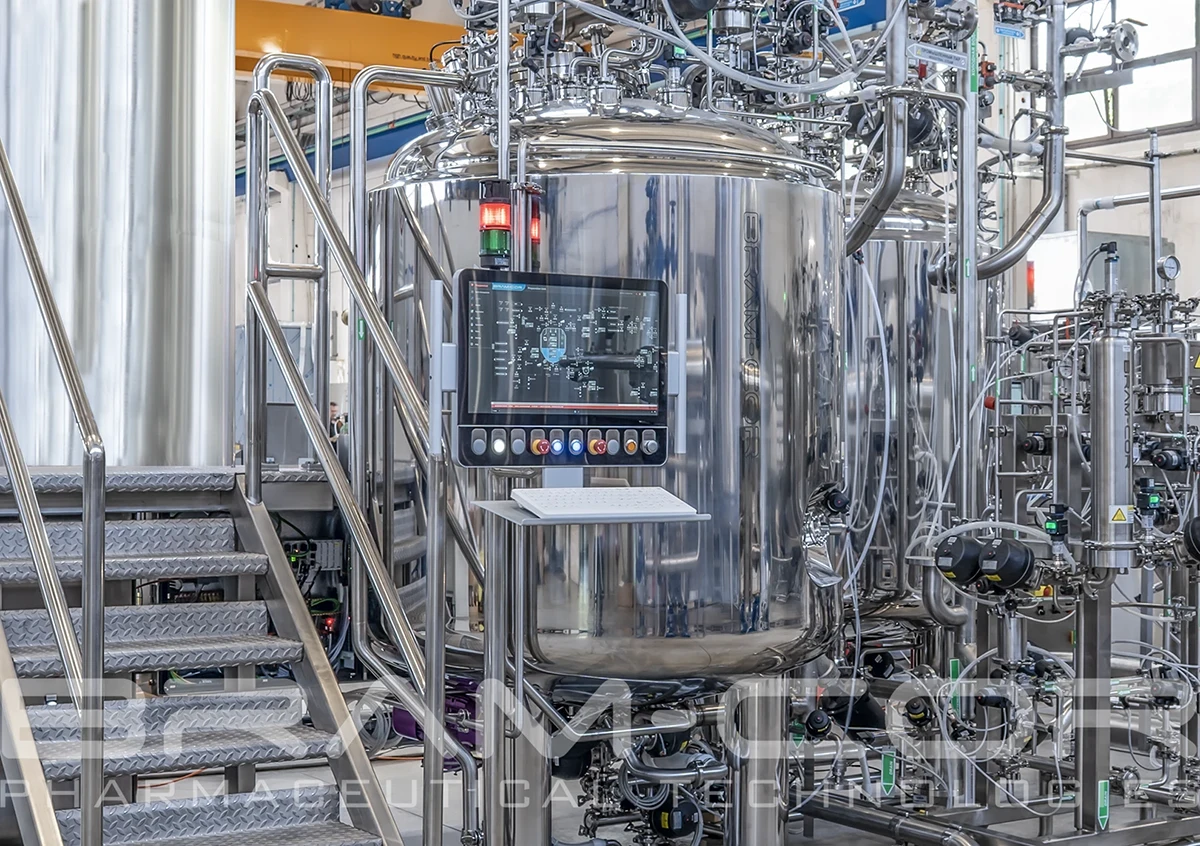
The image above shows a detail of a glucose line for the production of TPN (Total Parenteral Nutrition) bags. Despite this evidence, the Bram-Cor project offers safe complete systems for both the production of bags and bottles. GMP requirements and pharmacopoeial standards provide the essential framework. Within that framework, however, each IV fluid project must be engineered around its specific products, production objectives, site conditions and operational requirements. As a result, Bram-Cor approach is therefore not limited to individual machines, but to the integration of the processes, utilities, facilities and qualification activities required to bring a parenteral manufacturing project from concept to validated production.
From Conceptual Design to Detailed Engineering
All Pharmaceutical Facilities need to be up-dated, competitive and efficient in operation, to diversify production programs, to reduce life-cycle costs and, above all, to comply to the appropriate pharmaceutical GMP regulation. Hence the Conceptual Design describes the general project organization; having a clear vision is to carefully consider, for example, the spaces in which employees will interact.
Besides, plant engineering complexity must achieve procedural clarity, capable of giving life to proactive behavior, safe movement and virtuous productivity. Following the Conceptual Design, Equipment and process flow are designed to allow a logical flow in order to avoid mix-ups of components, drug product, closures, labeling, in-process materials or cross contamination.
Consequently, the Detailed Engineering considers all process flows (raw materials, finished products, personnel, waste, etc.) and detailed project specifications. Through our software we can perform all necessary simulations and recommend the best solutions. We provide a complete set of specifications in our DESIGN QUALIFICATION (DQ) protocols, which are submitted to our Customer for approval before starting the equipment construction.

Bags, Bottles and Process configuration
IV solutions can be manufactured and supplied in different primary container systems, including flexible bags and rigid bottles. Consequently the choice depends on the formulation, product characteristics, sterilization strategy, distribution requirements, filling technology and the intended use of the finished product. Bags can offer advantages in terms of format flexibility, handling and logistics, while bottles may remain appropriate for specific products, markets and manufacturing configurations.
For this reason, the engineering of an IV fluid facility should not begin with a predetermined container technology. It should begin with the product, the process requirements and the objectives of the manufacturing project. Therefore, Bram-Cor designs and integrates process systems for different IV fluid configurations, allowing the manufacturing solution to be adapted to the specific requirements of the product and the facility.
From Water to Filling
An overview of the integrated process behind an IV fluid manufacturing facility, from pharmaceutical water generation and preparation through formulation, processing and final filling.
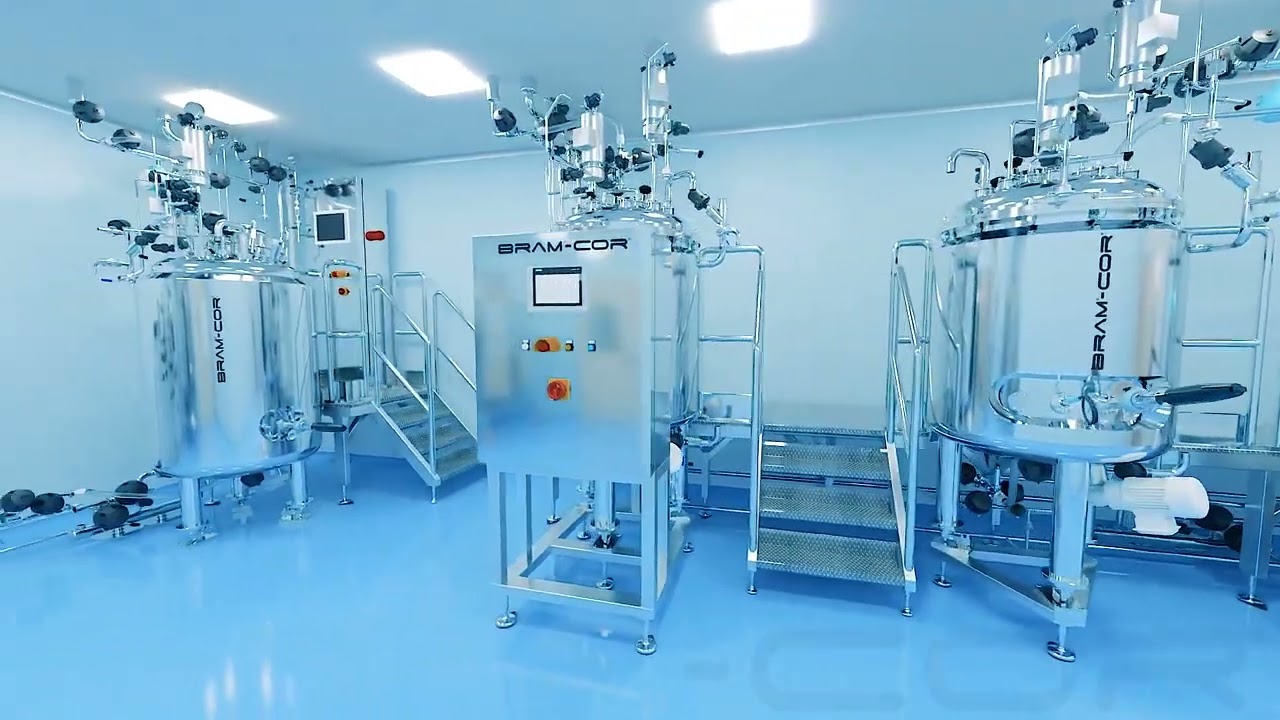
The animation illustrates the engineering relationships between the main process areas and is intended as a conceptual representation of an IV fluid manufacturing project. For a broader introduction to WFI production and the critical issues associated with pharmaceutical water systems, visit waterforinjection.com.
A Turnkey Roadmap
The standards of good manufacturing practice (cGMP) require special attention to risk assessment and verification procedures: “… it is requirement of good manufacturing identify the activities of validation necessary to demonstrate control critical aspects of particular operations. The significant changes made to installations, equipment and processes, which may affect product quality, should be validated. A procedure for risk assessment should be used to determine the scope and extent of validation.”
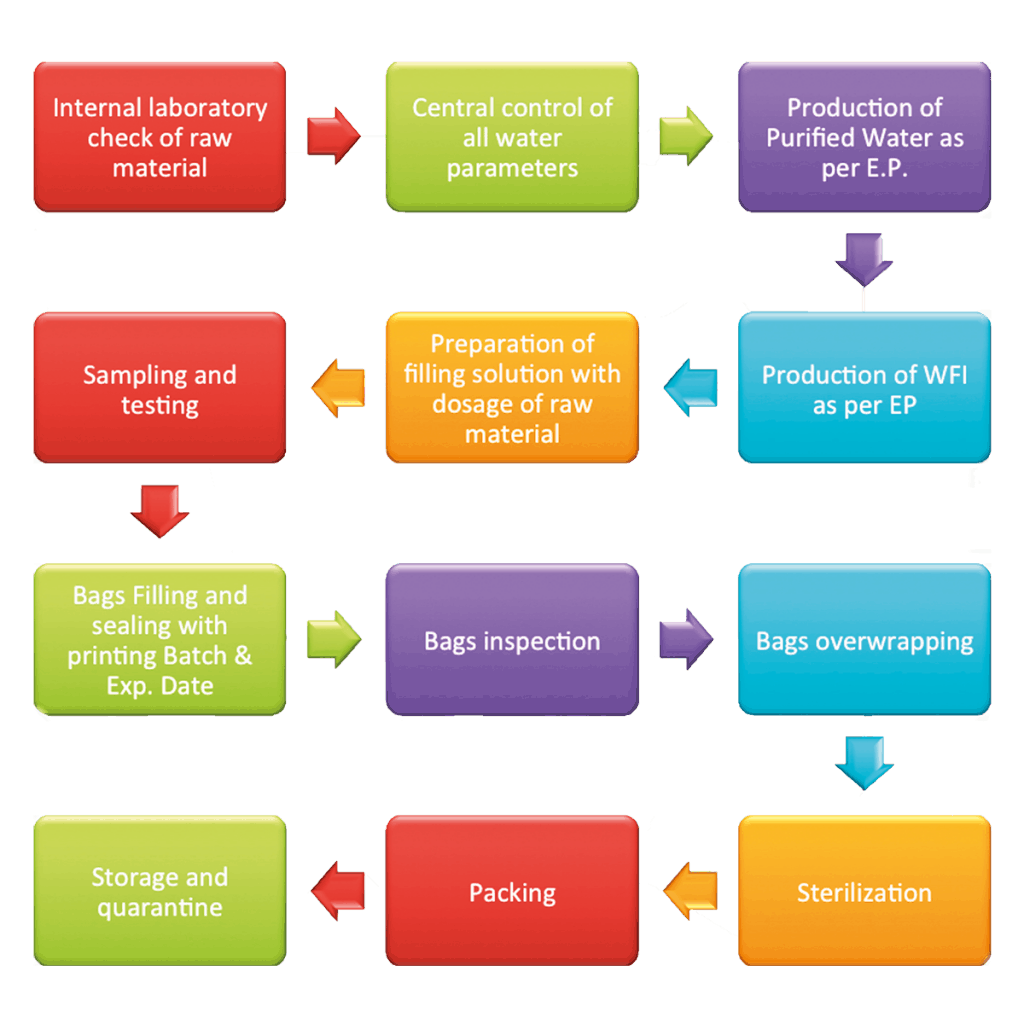
The Validation Master Plan serves to make sure that all equipment, procedures, that may affect the quality or integrity or effectiveness of the product, are validated. Therefore it contains the general principles which comply during the validation task, and plans activities to be carried out for this purpose.
- Basic Engineering
- Detailed Engineering
- Design Qualification
- Inlet Water Pretreatment Plant
- Pharmaceutical Water Systems (Softened, Purified and Distilled Water)
- Pharmaceutical Processing and Solution Preparation Systems
- Pharmaceutical Forming, Filling, Inspecting, Packaging lines
- Clean Rooms
- Epoxy coating of the floors
- HVAC and air treatment plant
- Autoclave
- Pure Steam Generator and PS circuit
- Laboratories of Analysis (Microbiological / Chemical)
- Site Master Plan
- Validation Master Plan
- Installation
- Training
- Start up
- Technical Files & Documentation
- IQ/OQ
- PQ Protocols
- Validation at Site
- Standard Operating Procedures
- Initial Know How Transfer
- GMP preAudit
- Spareparts for n years
- Technical note by Bram-Cor engineering department · updated Oct 2026 – Data may change without notice.
